Pay in installments of $6.05 with
 ,
,
 and
and

Shipping Estimate
USA
- USA
- CAN
- USA
- CAN
Ships within 48 hours · Estimated delivery Jun 29 - Jul 4
 Promo Codes Available:
For Your Every Summer RSVP, with Code: SUMMER15
Description
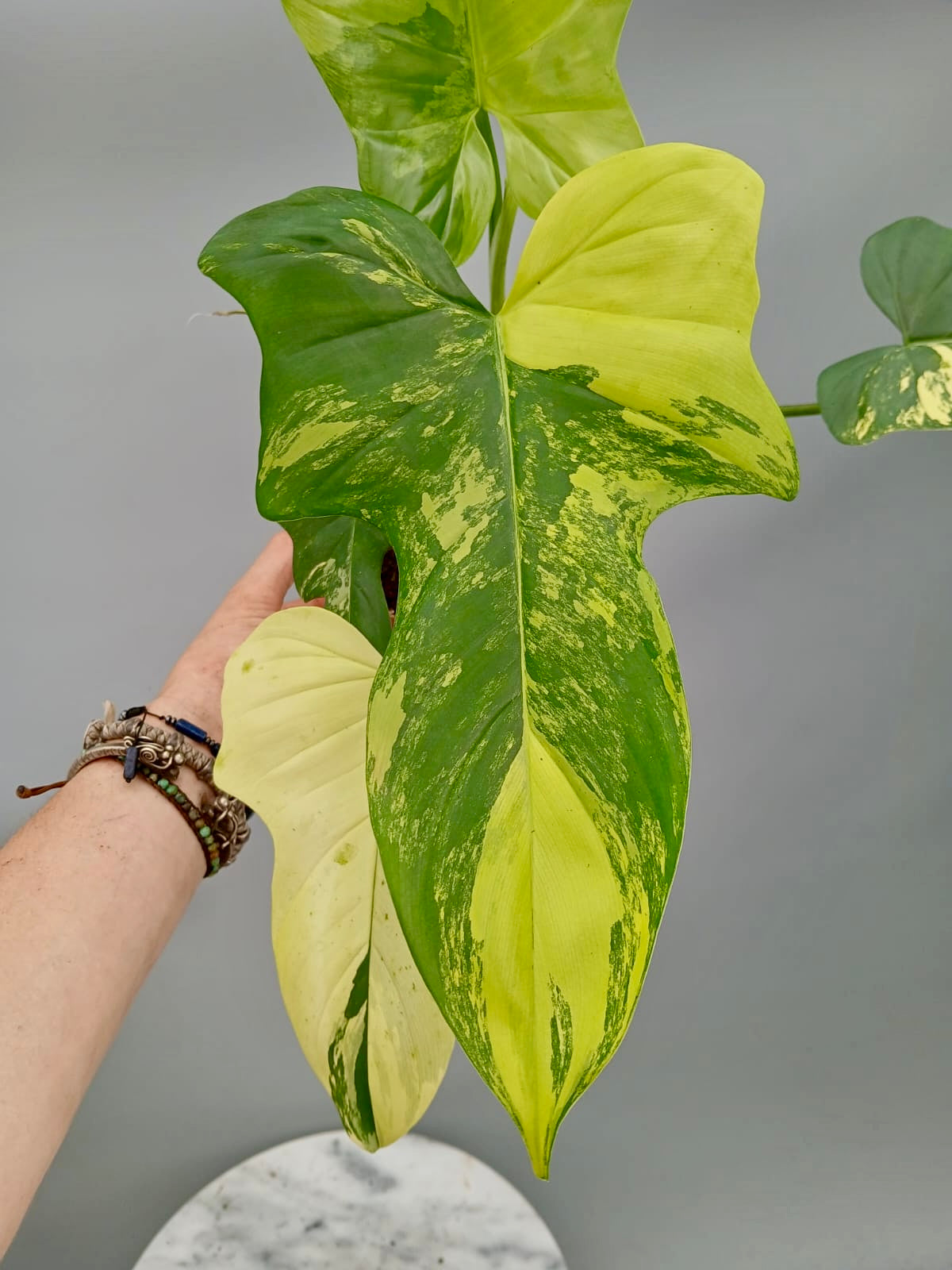
philodendron yellow violin Philodendron Violin Variegated (Highly variegated)The Philodendron pedatum Violin Variegated is a striking rarity with elegant leaf fingers. It is a relatively easy houseplant, easily adapting to a living room climate. Its aesthetic value is mainly in its variegated leaves. Origin The Philodendron pedatum is native to the tropical rain forests of South America. This particular variety nicknamed 'Violin' owes its name to the shape of the leaf, which is reminiscent of a violin. The variegated variety
The Philodendron pedatum Violin Variegated is a striking rarity with elegant leaf fingers. It is a relatively easy houseplant, easily adapting to a living room climate. Its aesthetic value is mainly in its variegated leaves.
Origin
The Philodendron pedatum is native to the tropical rain forests of South America. This particular variety nicknamed 'Violin' owes its name to the shape of the leaf, which is reminiscent of a violin. The variegated variety is rare in culture and is only propagated by a small number of specialized growers.
Characteristics
This variegated pedatum immediately stands out because of its deeply incised leaves, which become more pronounced in shape with age. The variegated markings vary per leaf from cream to yellow or sometimes almost white-green areas, beautifully scattered over the dark green leaf surface. Each leaf is unique. As the plant ages and receives more light, the incisions become deeper and the variegation more pronounced. The veins remain clearly visible, giving the plant an elegant character. A rare find for the true enthusiast.
Care
Light
Place the plant in a bright spot without direct sunlight. Too much sun can burn the variegated parts, while too little light reduces variegation.
Temperature
Ideally between 18 and 28°C. Protect from drafts and cold nights below 15°C.
Substrate
Use an aerated, well-draining mixture based on fine tree bark, coconut fiber and possibly sphagnum. This mimics the natural conditions in which this epiphyte grows.
Humidity
A humidity level above 60% is recommended. In drier air, a humidifier or regular spraying can help keep the foliage in top condition.
Nutrition
During the growing season, give a light dose of balanced, fertilizer for aroids once a month. Preferably use a fertilizer without excessive nitrogen to keep the leaf markings beautiful.
Watering
Allow the top layer of the substrate to dry slightly between waterings. Preferably use demineralized water or clean rainwater at room temperature. Overwatering should be avoided to prevent root rot. Do not leave water at the bottom of the pot for too long.
Flowering
Although flowering in room conditions is rare, under ideal conditions this species can bloom with inconspicuous bracts. However, the ornamental value is entirely in the striking foliage.
Shipping Notes
- Free Standard Shipping on $100+ Orders to the USA.
- Except Preorder products are shipped in 48 hours.
- Delivery to the USA:
- Standard Shipping : 3-10 business days
- If time is of the essence, please consider selecting expedited delivery for faster service.
Exchange/Return Notes
- We offer a 30-day return/exchange service after receiving.
- Final sale items are not eligible for returns or exchanges.
- To process your return/exchange, please contact us at [email protected]
- Please click here for more details>>> Return & Exchange Policy